October 26, 2013
Day 23 - Aizu-Wakamatsu
Aizu-Wakamatsu (会津若松) is a former castle town with a long samurai tradition. At the heart of the city is Tsuruga Castle, one of the last strongholds of samurai loyal to the shogunate during early times of the Meiji Period. The castle was destroyed after the divisive Boshin War of 1868, and was only recently rebuilt in the 1960s.
Other remnants of Aizu-Wakamatsu's samurai heritage include the Aizu Bukeyashiki, a well preserved residence that served as the quarters of some of the most important and highest ranked samurai in the region, and Iimoriyama, the site where a young group of Aizu soldiers took their own lives after they mistakenly believed that Tsuruga Castle had been taken.
|
|
|
Aizu-Wakamatsu
I woke up this morning surrounded by the beautiful fields of Kitakata’s countryside at Morihime Noen, a little farm/B&B where I am staying tonight as well. The house is really lovely and the owner serves delicious food, mostly coming from her organic hyper productive veggie patch. Actually, there is even rice drying in front of my room - this is how naturally things are done here at Morihime Noen.
I had a bit of a rude awakening around 2am with a strong earthquake rattling the house, but thankfully Japanese engineering can withstand a 7.3 quake as others would withstand a a sneeze, so absolutely no harm was done.
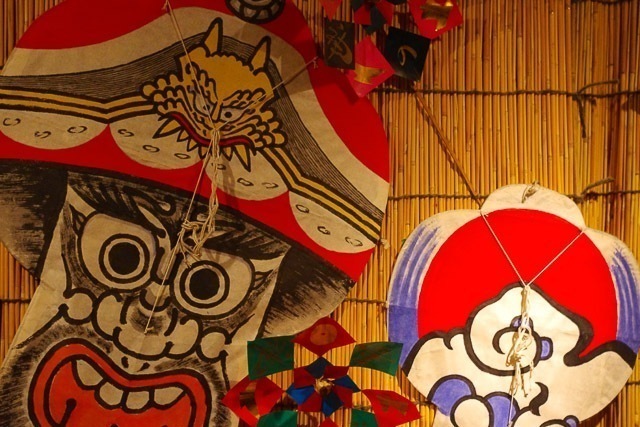 In Tsuruga castle Today’s walk started at Aizu Wakamatsu station where Sugimoto-san, Azuma-san and I met 3 other guides that would spend the day with me. From there we went to visit the beautiful Tsuruga castle, a very important place in Japanese history. It is also the only Japanese castle with a red roof, which was quite interesting.
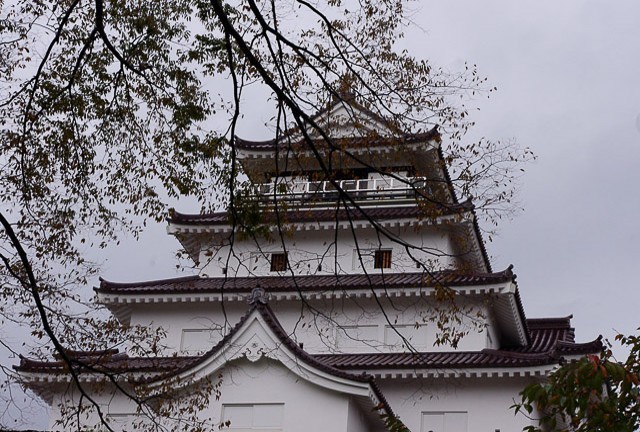 Beautiful Tsuruga castle 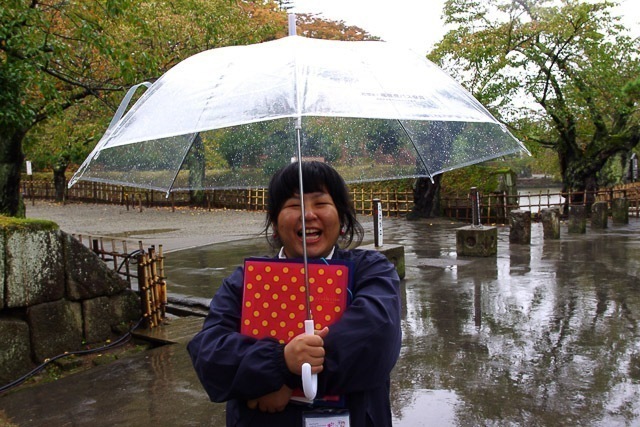 One of my two lovely smily guides, Satomi-san 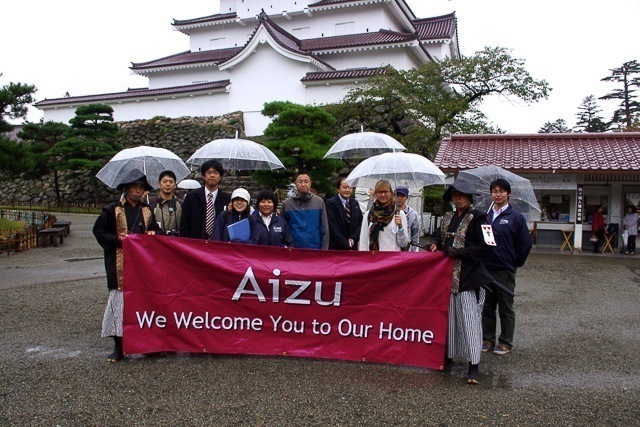 The Aizu team - complete with samurai 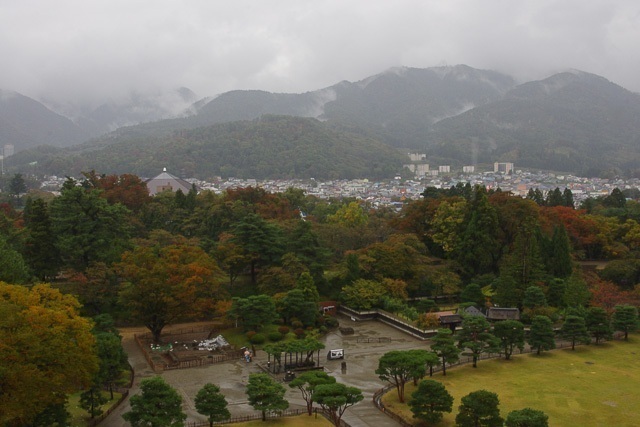 View of Aizu's misty mountains from the top of the castle From there we went to Mount Iimoriyama which is sadly famous for it being the place where about 15 very young samurai (aged between 15 and 20) committed suicide thinking that the castle had been taken or had surrendered to the enemy. However the smoke they saw simply was the smoke of the buildings around the castle being burnt down, so their death was pretty much in vain.
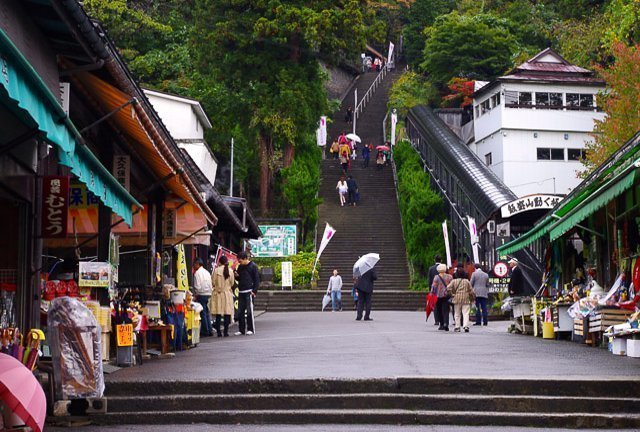 The steep steps leading up to Iimoriyama, where the poor samurai committed ritual suicide We stopped for a ginormous lunch - sauce katsudon and curry yakisoba. The katsudon in Aizu Wakamatsu is famous because it doesn’t have any egg and is cooked in the sauce. It really was delicious, as well as the curry sakisoba. Japanese curry being my only source of spice in this trip I was very very happy to have some on a rainy day like today.
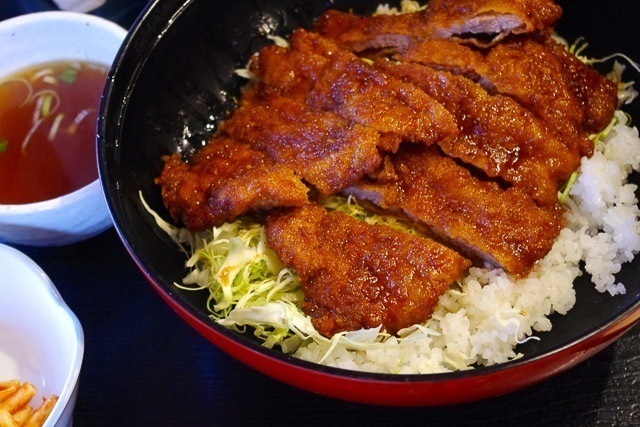 Sauce tonkatsu Aizu is famous for its history and being an important place where samurai used to live. We thus went to visit a samurai residence, Aizu Bukeyashiki. A truly great way to get a glimpse of samurai life, walking through the grounds of the 38 room residence was very interesting.
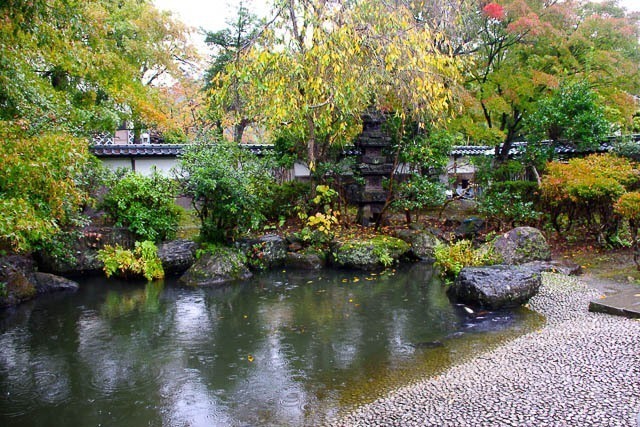 A part of the beautiful garden at the samurai residence 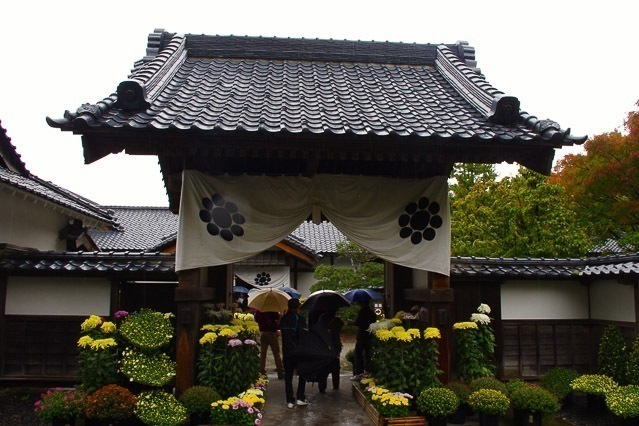 Entrance of Aizu Bukeyashiki 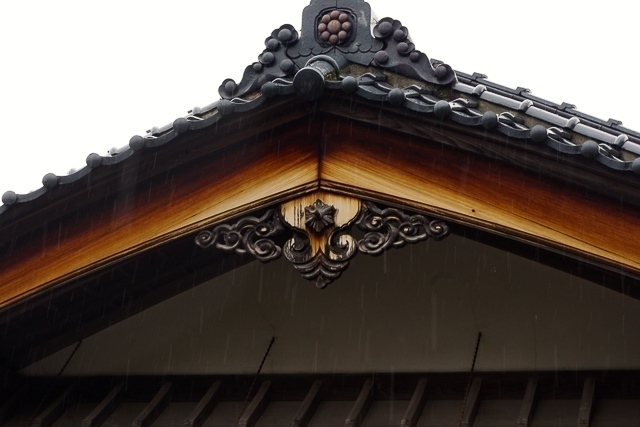
From there we went to Oyakuen garden where I was showed a tea ceremony and also tried to make my own tea... although mine was hardly as frothy as the tea master’s. We then went for a walk around the garden, which has a lot of interesting medical herbs in it as well as beautifully manicured trees and shrubbery, slowly turning red and gold.
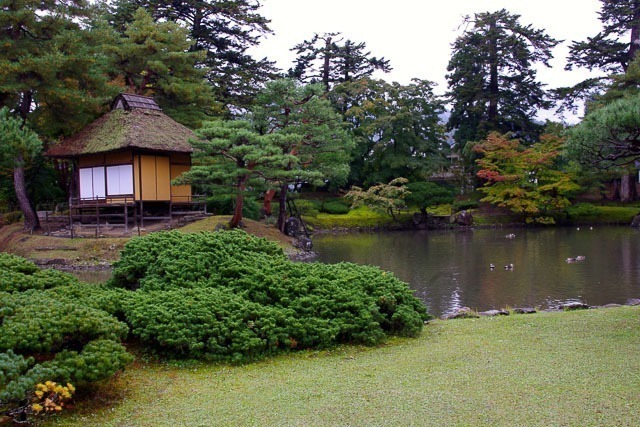 Oyakuen garden 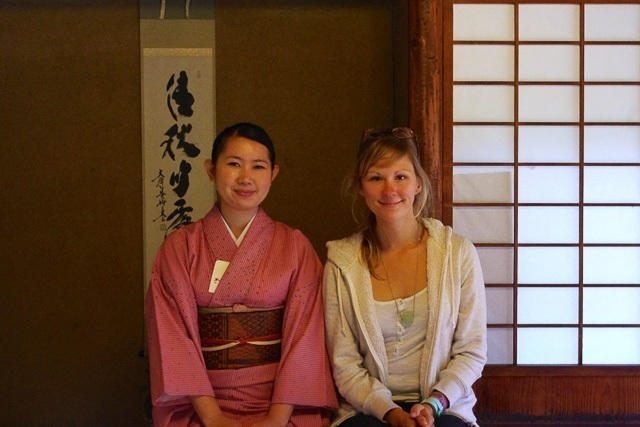 The tea master and me - Oyakuen garden 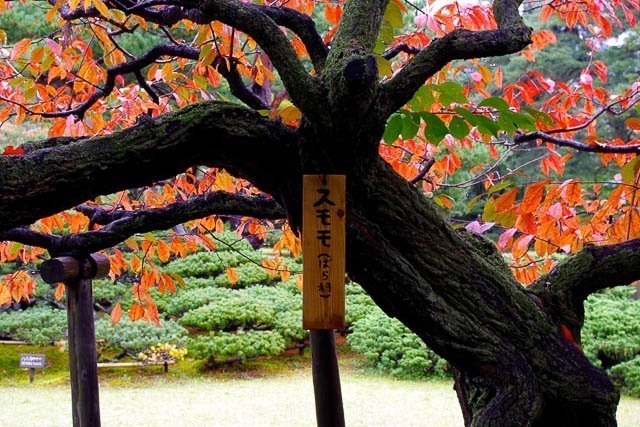
|
Today's Walk: Aizu-Wakamatsu, an old castle town with some unlikely samurai heros
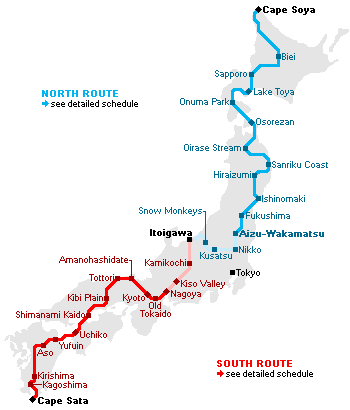
Starting at Aizu-Wakamatsu Station, today's walk leads through the pleasant streets of Aizu-Wakamatsu toward Tsuruga Castle, a modern yet beautiful reconstruction that is unique among Japanese castles for its red roof tiles. After exploring the castle keep and grounds, we will walk over to the Aizu Bukeyashiki, a nice example of a residence of a high ranked samurai family.
The route will end at Mount Iimoriyama, an interesting site where twenty young soldiers, aged 14 to 16, committed suicide at the end of the Bonin War (1868) when they mistakenly believed that Tsuruga Castle had fallen. The gravesites are located partway up the mountainside from where you have good views out over the city.
|
Date
|
October 26, 2013
|
|
Start Time
|
9:00
|
|
Start
|
Aizuwakamatsu Station
|
|
Goal
|
Mount Iimoriyama (飯盛山)
|
|
Distance
|
8 kilometers (about 4 hours)
|
|
Terrain
|
The entire route follows easy-to-walk street roads with some minor inclines. A series of (paid) escalators lead most of the way up Iimoriyama at the end of the route, however the monuments lie pretty low on the mountain slope so they really only bypass a few flights of stairs.
|
|
Weather
|
Average daytime high: 17 degrees Celsius (63 degrees Fahrenheit)
Average nighttime low: 7 degrees Celsius (45 degrees Fahrenheit)
 Weather Forecast for Aizu-Wakamatsu |
|
Access
|
Aizu-Wakamatsu Station lies along the JR Banetsu-sai Line from Koriyama (75 minutes, 1110 yen, hourly departures). From there, Tohoku Shinkansen trains connect to Tokyo and Sendai.
More details on how to get to Aizu-Wakamatsu
|
|
Lodgings
|
Aizu-Wakamatsu offers multiple hotels and pensions.
Search hotels in Aizu-Wakamatsu through
Booking.com or Japanican
|
|
|
The deadline for answering the quiz question for day 23 has passed.
What is a famous souvenir of Aizu?
|
0%
|
A yellow giraffe-tiger (kirin) made of glass
| |
|
0%
|
A brown bear made of wood with a salmon in its mouth
| |
|
0%
|
A green pig made of washi paper
| |
|
100%
|
A red cow made of paper mache
| |
|
0%
|
None of the above
| |
|
The correct answer is: A red cow made of paper mache
The Akabeko is a red cow made of paper mache with a wobbly head.
Current Standings: (after 30 days)
|
28 Points:
|
Csabba, AlexanderStankov
|
|
27 Points:
|
gladhiola, almoehi, , mikaelus, , , , , , , , , , , , , , , , , , , , , , , , , , , , ,
|
|
26 Points:
|
Rabbityama, Proxy707
|
More about the quiz
|
|












|