Japan Domestic Air Tickets
Japan Guide Homepage
Travel
Living
A-Z
Forum
Jobs
Friends
Shopping
Arts and Crafts
-
Food
-
History
-
Language
-
Photo Gallery
-
Religion
Sign in for a personalized experience. Don't have an account yet? Sign up now.
Korean
Traditional Chinese
Simplified Chinese
 
Search this site

Hotel Reservations

(check-in)

Online Hostel Bookings
Hostels and inexpensive ryokan from $10 per night!
Car Rentals
Compact cars from around 4,000 Yen/day!

Related Pages
Religion
History
Travel

Visiting temples
Buddhism
Shrine
Shinto
Architecture

Related Questions
Temple stamps
 2 reactions, last updated 90 days ago
Attire for Temples and Shrines
 1 reaction, last updated 137 days ago

Survey
How would you rate your experiences staying at Japanese hotels/ryokan?
Very good
Good
Neither good nor bad
Bad
Very bad
Never stayed at one
see results
Other Surveys:
Next trip to Japan
Improvements to Tourism
Financial Crisis
Ski Destination
Preferred way to stay at a ryokan
Purpose of visit
Most popular region
Have you recently entered Japan?

japan-guide.com newsletter
Keeping you up to date on Japan travel and living related issues and site updates. Click here to subscribe!

japan-guide.com forum
? Any questions? Ask them on the question forum!

Sponsored Listings
Japan - Order FREE Brochure!
About vacation plans and specialty travel.
Car Rental
The cheapest rates in Japan!
Tour Packages
Guided and individual tour plans.

 
Home - Religion
Buddhist Temples
 
basic information

Temples are the places of worship in Japanese Buddhism. Virtually every Japanese municipality has at least one temple, while large cultural centers like Kyoto have several thousands.

Temples store and display sacred Buddhist objects. Some temples used to be monasteries, and some still function as such. Structures typically found at Japanese temples are:

Main hall

The sacred objects of worship, such as statues, are displayed in the main hall. Main halls are called kondo, hondo, butsuden, amidado or hatto in Japanese.

Example: Main hall of Todaiji in Nara.

Lecture hall

Lecture halls are for meetings and lectures and often also display objects of worship. Lecture halls are called kodo.

Example: Lecture hall of Toji in Kyoto.

Pagoda

The pagoda, a structure that has evolved from the Indian stupa, usually comes with three (sanju no to) or five (goju no to) stories. Pagodas store remains of the Buddha such as a tooth, usually in form of a representation.

Example: 3-storied pagoda of Kofukuji in Nara.

Gates

Gates mark the entrance to the temple grounds. There is usually one main gate, and possibly several additional gates, along the temple's main approach.

Example: Sanmon Gate of Kenchoji in Kamakura.

Bell

On New Year's Eve, temple bells are rung 108 times, corresponding to the Buddhist concept of 108 worldly desires.

Example: Great Bell of Kenchoji in Kamakura.

Cemetery

Most cemeteries in Japan are Buddhist and are located at a temple. The Japanese visit their ancestors' graves on many occasions during the year, especially during the obon week, the equinoctial weeks and anniversaries.
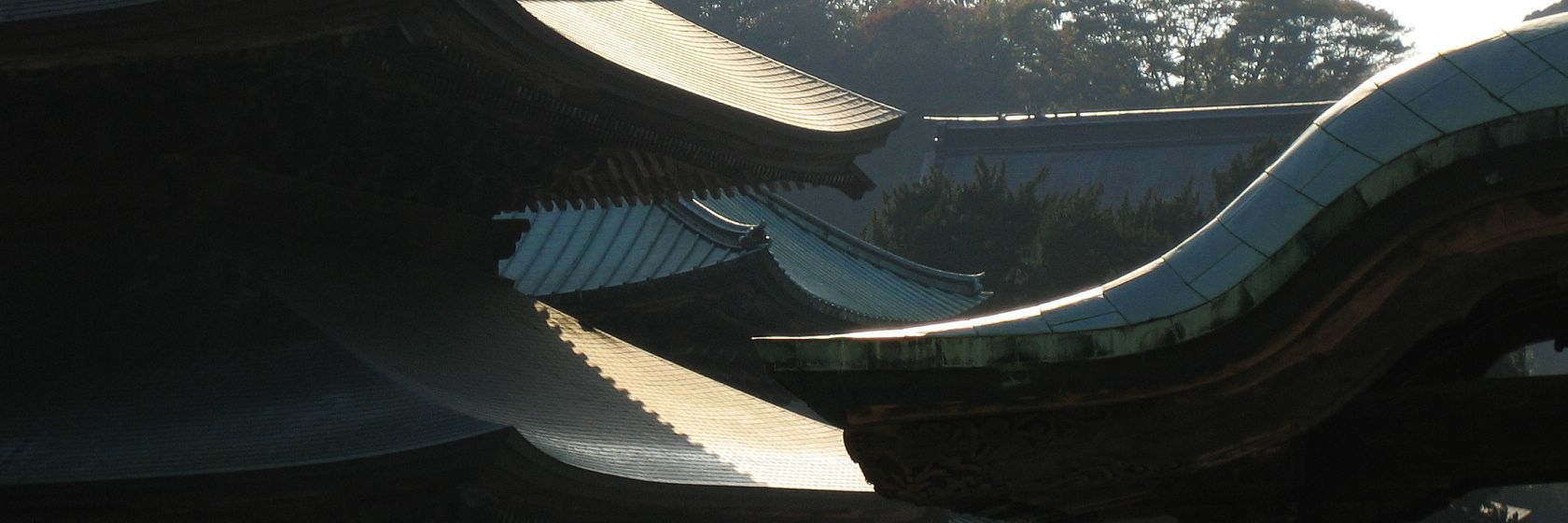
The best cities to visit temples are Kyoto, Nara and Kamakura. One of the best places to overnight at temples is Mount Koya.

List of Famous Temples
Shimokita Peninsula
Hiraizumi
Dewa Sanzan
Sendai
Matsushima
Nikko
Ikaho
Kawagoe
Narita
Tokyo
Kamakura
Nagano
Nagoya
Gujo
Fukui
Kyoto
Osaka
Nara
Yoshino
Koyasan
Himeji
Kinosaki Onsen
Onomichi
Yamaguchi
Hagi
Matsuyama
Fukuoka
Dazaifu
Nagasaki
  best of the best    best of Japan    outstanding

Any advice or questions? Voice them in the forum!

english links

BuddhaNet
Worldwide Buddhist Information


May 31, 2008  
Copyright © 1996-2009 japan-guide.com All rights reserved
home - site map - privacy policy - terms of use - contact - L‚ɂ‚¢‚Ä - advertising

Asian-inspired
Plasma TV Stands