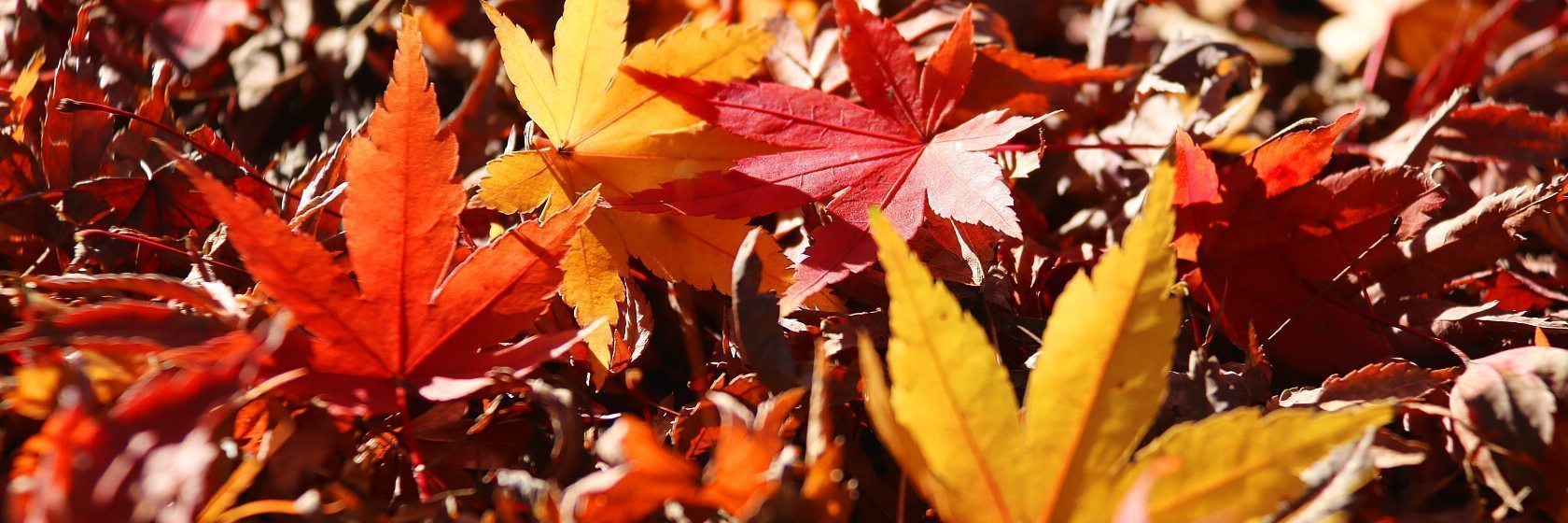
Each year, starting in late September, the "koyo front" slowly moves southwards from the northern island of Hokkaido until it reaches the lower elevations of central and southern Japan towards the end of November.
Below is a list showing the approximate autumn leaf season for various regions of Japan. Caution: the schedule can differ from year to year depending on the weather:
Famous spots for autumn leaves are scattered across the country, especially in mountainous regions, parks, temples and gardens. A short list of popular koyo spots in the Kyoto and Tokyo regions follows below:
|
Kyoto:
|
|
Tofukuji
Tofukuji Station, JR Nara Line and Keihan Main Line
Usually best in the second half of November, this temple displays some of Kyoto's most spectacular autumn foliage and gets very crowded.
|
|
Takao
JR Bus or Kyoto City Bus
The spectacular autumn colors around the temples in this forested valley north of Kyoto are usually at their best a few days before the autumn colors in the city center.
|
|
Yoshiminedera
Bus from Mukomachi or Higashi-Muko Station
Similar to Kiyomizudera on Kyoto's eastern mountains (Higashiyama), Yoshiminedera is a temple on the slopes of Kyoto's western mountains (Nishiyama) with nice views over the city.
|
|
Arashiyama
Keifuku, JR or Hankyu Railways
Arashiyama is a district at the outskirts of Kyoto. The forested mountains in the background and the trees on the grounds of Arashiyama's temples usually turn colors in the second half of November.
|
|
Shugakuin Imperial Villa
Shugakuin Station or Shugakuin-rikyu bus stop
The spacious and elegant gardens of this imperial villa feature beautiful autumn colors during the second half of November. It can only be visited on tours, and advance reservations are mandatory.
|
|
Enkoji
Ichijoji Station or Ichijoji-Sagarimatsucho bus stop
A small temple within walking distance of Shugakuin Imperial Villa (see above), Enkoji offers beautiful autumn colors. Be sure not to miss the spectacular bird's view of the temple from the hill behind.
|
|
Eikando
Nanzenji-Eizando-michi bus stop
Eikando, also known as Zenrinji Temple, is another of Kyoto's most popular koyo spots. It is one of several temples to offer special light-up opening hours in the evenings.
|
|
Tokyo:
|
|
Rikugien
Komagome Station (JR Yamanote Line)
A Japanese landscape garden in central Tokyo. Autumn leaves are usually best towards the end of November.
|
|
Yoyogi Koen
Harajuku Station (JR Yamanote Line)
A Western style city park in central Tokyo. Autumn leaves are usually best in the second half of November.
|
|
Koishikawa Korakuen
Iidabashi Station (JR Chuo/Sobu Line)
A Japanese style landscape garden in central Tokyo. Autumn leaves are usually best towards the end of November.
|
|
Around Tokyo:
|
|
Mount Takao
Takaosanguchi Station (Keio Railways)
A wooded mountain, roughly one hour west of Shinjuku. The autumn leaves are usually best in the second half of November.
|
|
Nikko
Nikko Station (JR or Tobu Railways)
The Oku-Nikko region around Lake Chuzenji and Yumoto Onsen is particularly nice for koyo. Depending on the elevation, the trees are most beautiful between late September and early November.
|
|
Hakone
Hakone-Yumoto Station (Odakyu Railways)
The area around Lake Ashi is particularly beautiful. The autumn leaves are usually best in late October and early November.
|
|
Fuji Five Lakes
Kawaguchiko Station (Fujikyu Railways)
Mount Fuji in combination with the lakes and autumn leaves makes a spectacular sight. The autumn leaves are usually best in late October and early November.
|
|
Shosenkyo Gorge
Kofu Station (JR Chuo Line)
Often refered to as Japan's most beautiful gorge, the Shosenkyo is particularly spectacular during the autumn leaf season, which usually takes place from October to mid November.
|
|
Nishizawa Valley
Enzan Station (JR Chuo Line)
A densely wooded, narrow valley with picturesque waterfalls. The autumn leaves are usually best in late October and early November.
|