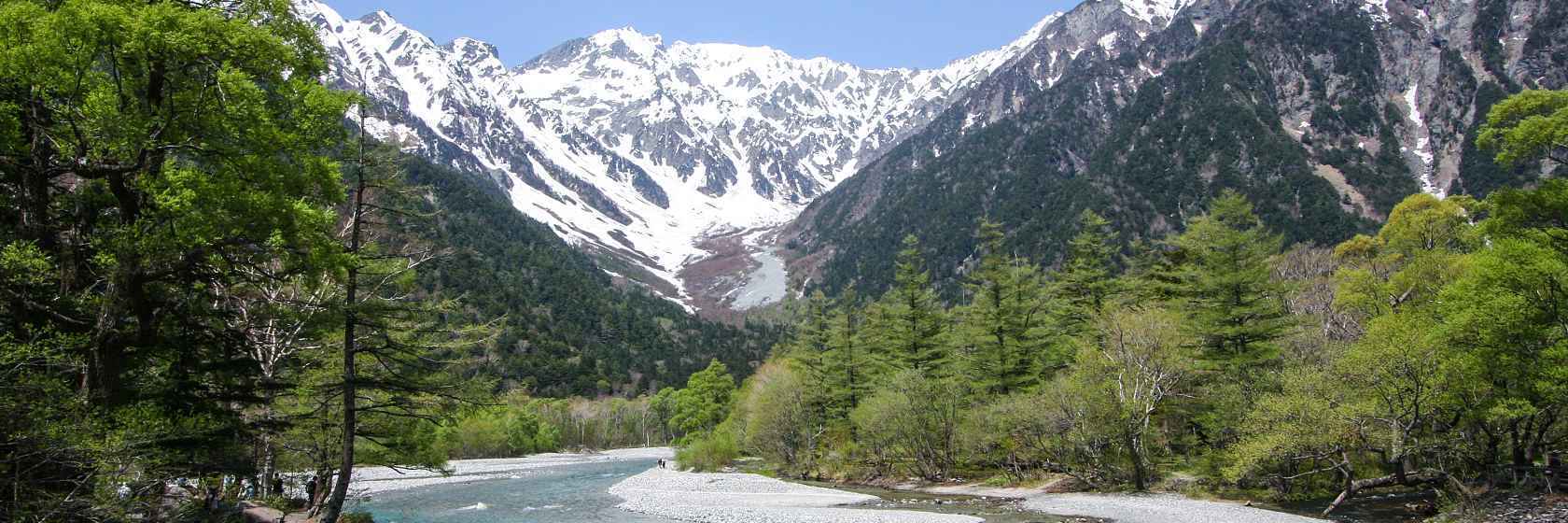
Many visitors to Japan limit their sightseeing activities to the country's heavily urbanized areas between Tokyo, Kyoto and Hiroshima. As a result, many return home with a hardened misconception that Japan is one large, densely populated megacity. In fact, however, over two thirds of Japan are covered by forested mountains and hills, compared to less than ten percent residential and industrial land.
The Japanese archipelago stretches nearly 3000 kilometers from north to south, allowing visitors to experience a wide range of natural sights from the drift ice in the seas off Hokkaido to the mangrove jungles in Okinawa. In between, there are majestic volcanoes, breathtaking coastlines and vast forests inhabited by monkeys, bears, deer, cranes and other wildlife. Places of particular natural beauty are protected as national parks and World Heritage Sites.
Mangroves on Iriomote
The following is a short selection of some of the best natural sites in Japan:
Mountains and volcanoes
Japan has a mountainous interior which is mostly made up of volcanoes. These heights provide plenty of hiking opportunities and scenic viewpoints from which to see the surrounding areas.
Mount Fuji is a beautifully symmetrical volcano, and the symbol and highest mountain of Japan. Climbing Mount Fuji is popular during summer with people ascending via four different trails. The Fuji Five Lakes region at the northern foot of Mount Fuji and Hakone are popular resort destinations with views of the mountain.
Mount Takao is one of the closest natural recreation areas to central Tokyo offering beautiful scenery, an interesting temple and attractive hiking opportunities. Visitors can choose to hike all the way up to the summit or take the cablecar or chair lift halfway up.
Mount Aso lies in the center of Kyushu and is part of the Aso-Kuju National Park. Its caldera is one of the largest in the world with a diameter of about 25 kilometers and a circumference of over 100 kilometers. Nakadake Crater at the center of the caldera is easily visited but not always accessible due to volcanic activities.
Capes, coasts and beaches
Japan's coastline is one of the world's longest, and many sections of it are quite impressive. Not only are there rugged cliffs, geological formations and hiking trails, but there are also plenty of beaches offering swimming and snorkeling opportunities.
The Kitayamazaki Coast is an eight kilometer long stretch of coastline in northern Iwate Prefecture featuring sheer, 150-200 meter high cliffs. The coast is best seen from the Kitayamazaki Observatory, a park at the northern end of the coastline.
The Jogasaki Coast is a beautiful section of coastline along the Izu Peninsula's eastern shore. There is an attractive hiking trail that follows the coast for almost ten kilometers, offering beautiful views of the jagged cliffs and stone formations along the edge.
Cape Oma is the northernmost point of the Shimokita Peninsula and of the entire Honshu Island, Japan's main island. The cape looks across over the Tsugaru Kaikyo Strait to southern Hokkaido where the city of Hakodate is visible on clear days. The area is most famous for the large tuna caught in its waters.
Gorges
Many gorges with beautiful views of cliffs, forests and waterfalls can be found in Japan. Many of the gorges can be hiked, while others can be enjoyed from boat tours or sightseeing trains.
The Takachiho Gorge in Miyazaki Prefecture is a narrow gorge lined with sheer cliffs and a 17 meter high waterfall along the way. Visitors can rent row boats to paddle down the river through the gorge or walk along paved paths that run along its edges.
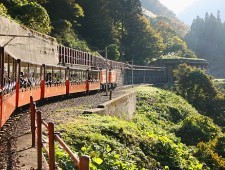
The Kurobe Gorge is a beautiful, forested ravine in the rugged mountains of the Northern Japanese Alps. It is one of the deepest gorges in Japan with steep, nearly vertical cliffs, untouched virgin forests and outdoor hot springs. The main attraction is the sightseeing train that operates twenty kilometers into the gorge.
The Geibikei Gorge is a spectacular natural site outside Hiraizumi in the interior of Iwate Prefecture. The best way to view the tall cliffs and rock formations in the gorge is to take a 90-minute ride on a flat-bottomed boat that leads about one kilometer in.
Caves
Large limestone caves can be found across Japan and offer natural formations like limestone pools, underground waterfalls and streams that were formed millions of years ago. Visitors can explore a portion of these caves via walking courses and marvel at their natural beauty.
Akiyoshido Cave in Yamaguchi Prefecture is one of Japan's largest and longest limestone caves. One kilometer of the nine kilometer long cave is open to the public, and various natural formations like limestone pools, underground waterfalls and streams, can be seen.
Abukumado Cave is a 3000 meter limestone cave network in eastern Fukushima Prefecture that was formed over 80 million years ago. About 600 meters of the caverns are opened to the public, and it takes about an hour to explore the main walking course.
Regarded as one of Japan's three great limestone caves, Ryusendo extends nearly 5000 meters into the mountains of Iwaizumi Town in Iwate Prefecture. About 700 meters of the cave are open to the public, and visitors can walk along the underground river and view three of the cave's four underground lakes.
Marshlands
Marshlands are popular hiking destinations found both up in the mountains and in lower elevations. Many marshlands are particularly beautiful during the autumn color season.
Oze National Park is an excellent hiking destination that is popular during the skunk cabbages blooming season in late spring and early summer and during the fall colors if autumn. There are numerous trailheads to access the well maintained trails that lead around the marshlands and park.
The Kushiro Marshland in eastern Hokkaido is a national park supporting the only known population of endangered Japanese cranes in the country. The park offers bird watching, nature viewing and walking trails.
Waterfalls
There are hundreds of waterfalls across Japan, and some of them, like the Nachi Waterfall, have been religious sites with long histories. Some waterfalls can only be accessed by hiking along nature trails, while others can be conveniently viewed from observation decks.
At 133 meters tall, Nachi Waterfall (Nachi no Taki) is the tallest single-tiered waterfall in Japan and is ranked as one of Japan's three most beautiful falls. Nachi no Taki was the original religious site in the Kumano Region and was venerated by the earliest Japanese people.
Hiji Waterfall is a 26 meter tall waterfall located in the northern Yambaru area of Okinawa Honto. The waterfall is at the end of a nature trail through the forest and is a good spot for a rest before making the return trip back.
The almost 100 meter tall Kegon Waterfall is the most famous of Nikko's many beautiful waterfalls, and ranked as one of Japan's three most beautiful falls. The waterfall is also a popular autumn color spot around mid to late October.
Rivers
There are many rivers in Japan, and some of them can be explored by river cruises. Other rivers are lined by hiking trails allowing visitors to enjoy the scenery at their own pace.
Most of Iriomote Island's interior is covered in dense jungle accessible by rivers that head inland from the sea. Kayak tours are offered on several of the rivers, while jungle boat cruises are organized on the island's two longest rivers.
The Oirase Stream is a picturesque mountain stream in Aomori Prefecture that is one of Japan's most famous and popular autumn colors destinations. Visitors can choose to hike, drive or take a bus to enjoy the views along the stream.
The Hozugawa River allows visitors to see the natural scenery of the largely undeveloped ravine from Kameoka to Arashiyama by joining a sightseeing cruise on traditional, flat-bottomed boats piloted by boatmen using oars and bamboo poles. The cruise is popularly combined with a ride on the Sagano Scenic Railway.
Lakes
There are a variety of lakes in Japan including caldera lakes, subterranean lakes and lagoons. Often surrounded by beautiful scenery, many lakes are popular hiking destinations, and some of them also offer sightseeing cruises.
Lake Towada is the largest caldera lake on Honshu, Japan's main island, and is characterized by its two peninsulas. The best way to see the lake is by sightseeing cruises which offer close up views of the peninsulas, while the shores of the lake and the nearby Oirase Stream offer beautiful autumn colors around late October.
Lake Mashu is a caldera lake in the Akan National Park. It is widely considered to be Japan's most beautiful lake, and also vies for the position of being the clearest lake in the world. Visitors are not allowed to go down to the water, but can view it from two observation decks stationed along the rim of the caldera.
The Shiretoko Five Lakes are a set of five small lakes that offer beautiful views of the surrounding mountains and wilderness in Shiretoko. Visitors can walk along an elevated boardwalk to enjoy views of the first lake, while nature trails lead around the others.
Bays
Bays have been admired for their scenic beauty for centuries, and even hold the three top spots on the famed list of Japan's three most scenic places.
Emerald blue Kabira Bay (Kabirawan) is considered Ishigaki Island's most scenic view. Swimming, snorkeling and diving in the bay are not allowed, but a touristy, 30-minute glass bottom boat ride lets you take a look at the bay's underwater world.
Matsushima Bay is dotted by over 200 small islands covered by pine trees and has been celebrated as one of Japan's three most scenic views for hundreds of years. The best way to enjoy the bay is by joining a sightseeing cruise.
Ago Bay at the southern tip of the Shima Peninsula, is a scenic, island-dotted bay with a rugged coastline. The bay is famous for pearl cultivation, and countless oyster rafts can be seen floating on the water. There are also sightseeing boat cruises that gives visitors a closer view of the smaller islands around the bay.
Others
Below are a few other unique natural attractions found in Japan:
The Amanohashidate Sandbar is a beautiful, three kilometer long isthmus that spans Miyazu Bay in northern Kyoto Prefecture. The sandbar is lined with about 8000 pine trees, and the view of the sandbar from the mountains at either end of the bay has been admired for centuries as one of Japan's three most scenic views.
The Tottori Sand Dunes are the largest sand dunes in Japan and Tottori's most famous tourist attraction. The sand dunes are about 16 kilometers long, up to two kilometers wide and 50 meters high. The nearby sand museum displays large sculptures made of sand.
The Naruto Whirlpools in the Naruto Strait are created by the large volumes of water moving between the Seto Inland Sea and the Pacific Ocean between high and low tide, combined with the unique underwater geography of the narrow strait. Visitors can join sightseeing cruises to get right up next to and among the whirlpools.