Samurai

The samurai (or bushi) were the warriors of premodern Japan. They later made up the ruling military class which eventually became the highest ranking social caste of the Edo Period (1603-1868). Samurai employed a range of weapons such as bows and arrows, spears and guns, but their main weapon and symbol was the sword.
Samurai were supposed to lead their lives according to the ethic code of bushido ("the way of the warrior"). Strongly Confucian in nature, bushido stressed concepts such as loyalty to one's master, self discipline and respectful, ethical behavior. Many samurai were also drawn to the teachings and practices of Zen Buddhism.
|

History
The samurai trace their origins to the Heian Period campaigns to subdue the native Emishi people in the Tohoku Region. Around the same time, warriors were increasingly hired by wealthy landowners that had grown independent of the central government and built armies for their own protection.
The two most powerful of these landowning clans, the Minamoto and Taira, eventually challenged the central government and battled each other for supremacy over the entire country. Minamoto Yoritomo emerged victorious and set up a new military government in 1192, led by the shogun or supreme military commander. The samurai would rule over Japan for most of the next 700 years.
During the chaotic era of warring states in the 15th and 16th centuries, Japan splintered into dozens of independent states constantly at war with one another. Consequently, warriors were in high demand. It was also the era when ninja, warriors specialized in unconventional warfare, were most active. Many of the famous samurai movies by Kurosawa are set during this time.
The country was eventually reunited in the late 1500s, and a rigid social caste system was established during the Edo Period that placed the samurai at the top, followed by the farmers, artisans and merchants respectively. During this time, the samurai were forced to live in castle towns, were the only ones allowed to own and carry swords and were paid in rice by their daimyo or feudal lords. Masterless samurai were called ronin and caused minor troubles during the 1600s.
Relative peace prevailed during the roughly 250 years of the Edo Period. As a result, the importance of martial skills declined, and many samurai became bureaucrats, teachers or artists. Japan's feudal era eventually came to an end in 1868, and the samurai class was abolished a few years afterwards.

How to appreciate the samurai today
Samurai-related attractions can be found across Japan in form of castles, historic residences, museums, historically themed amusement parks and dress-up tours. The following are some of the many ways tourists can learn about and experience samurai culture and lifestyle today:
Castles
Castles developed over the centuries from small defensive forts built high up on mountains into massive complexes at the heart of cities, where they served as the status symbol, administrative center and residence of the local lord. The lord's samurai vassals resided in the town surrounding the castle: the higher their rank, the closer they resided to the castle.
Over a hundred castles exist in Japan today, including twelve original castles (whose main keeps have survived the post-feudal years intact) and many modern reconstructions. Most of the castles contain exhibits or entire museums that display samurai artifacts and lifestyle. See our castle page for more information.

Samurai districts and mansions
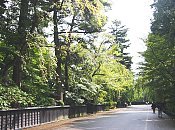
In order to separate the social castes, samurai were forced to reside in designated districts of the castle towns during the Edo Period. Today, a few of these samurai districts remain preserved with their historic atmosphere of narrow lanes, earthen walls, entrance gates and residences, and allow tourists to get a glimpse into the samurai lifestyle. In other cases, single samurai mansions have been preserved and opened to the public. Below is a list of some of the better of these districts and residences:


Museums
While most history museums in Japan display at least a few samurai swords or armors, there are a few specialized museums that exclusively feature relics of the samurai.
Some of these include the Sword Museum in Tokyo, which displays one of the largest public sword collections in the country; the Tokugawa Art Museum in Nagoya, which exhibits armor, swords, tea utensils, artwork and household items; and the Maeda and Honda Museums in Kanazawa, which display relics of the two most prominent samurai families in the region.

Theme parks
There are a few history-based theme parks around Japan, which feature recreated towns from the feudal era. The parks typically offer a variety of attractions, live shows, museums, shops and restaurants and are usually staffed by a whole host of "townspeople" in period costumes, making them a fun way to experience the culture and history of samurai.


Samurai-related activities
There are several samurai-related activities and experiences available that allow tourists to experiences the samurai culture. Among them are dress-up experiences in which participants can put on a samurai armor or ninja costume, and martial art workshops about samurai weapons and fighting techniques.
|
Questions? Ask in our forum.