Tamozawa Imperial Villa
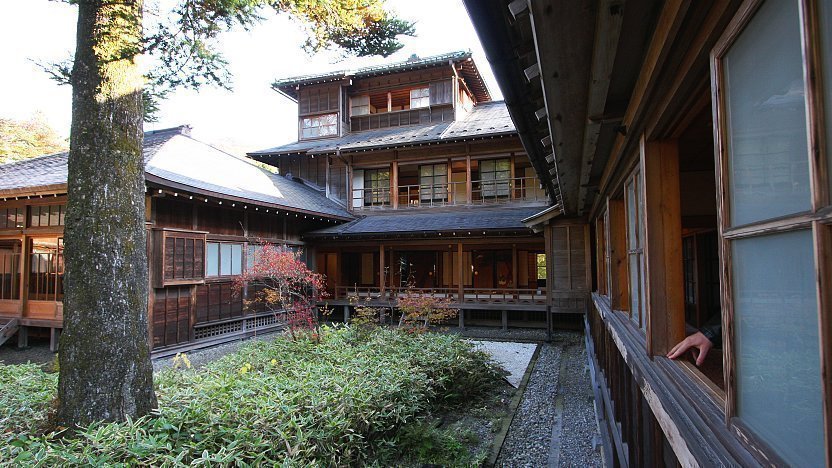
Tamozawa Imperial Villa (“c•ê‘òŒä—p“@, Tamozawa Goyōtei) blends traditional Edo and early modern Meiji Period architecture throughout its 106 rooms. The villa was erected in Nikko in 1899, using parts of a residence that originally stood in Tokyo.
Before being moved to Nikko, the building served as the Tokyo residence of a branch of the Tokugawa family and was later temporarily used as the Imperial Palace. In Nikko, it was enlarged into a summer residence for the Imperial Family, but suffered neglect after World War II. In the year 2000, the villa was opened to the public after extensive renovations.

In addition to the building's long line of illustrious occupants, Tamozawa Imperial Villa is one of the largest remaining wooden buildings in Japan. The interior of the villa is a curious mix of Japanese and Western styles. Many floors are carpeted, and elaborate chandeliers hang from the ceilings. Yet the villa's Japanese elements, such as sliding paper doors and tatami flooring are prominent as well.
Although still impressive in size and grandeur, Tamozawa Imperial Villa currently occupies only one third of its original area. It now functions as a museum and memorial park, and is well equipped with multilingual displays for visitors. The manicured Japanese style garden, that surrounds the villa, has several maple trees which offer autumn colors usually around late October and early November.

Getting there and around

From JR or Tobu Nikko station, take a Tobu bus bound for Chuzenji Onsen or Yumoto Onsen and get off at the Tamozawa bus stop. The bus ride takes 10 minutes and costs 350 yen one way. The villa can also be reached in about a 20 minute walk from Toshogu Shrine.
How to get to and around Nikko

Hours and Fees
Hours
November to March: 9:00 to 16:30 (entry until 15:45)
Closed
December 29 to January 1
Admission
Questions? Ask in our forum.
Links and Resources
Hotels around Nikko

-
-
![]() Sanga Nikko - An Authentic Japanese Guesthouse ExperienceLocated in Nikko, 2.1 km from Nikko Toshogu Shrine, Sanga Nikko - An Authentic Japanese Guesthouse Experience provides rooms with free WiFi access. The property is set 10 km from Kegon Falls and 22 km from Nikk?-kokuritsu-k?en. Nikko Station and Tobu-Nikko Station are within a 5-minute walk from the property. The property is equipped with two shared bathrooms for 3 rooms. A range of activities are offered in the area, such as cycling and running. A supermarket is situated within a 5-minute walk from the property. This property is situated a short distance from attractions such as Rinnoji Temple and Shinkyo Bridge. Futarasan Shrine is 2.2 km from the property, while Chuzenji Lake is 12 km away.View on Booking.com
Sanga Nikko - An Authentic Japanese Guesthouse ExperienceLocated in Nikko, 2.1 km from Nikko Toshogu Shrine, Sanga Nikko - An Authentic Japanese Guesthouse Experience provides rooms with free WiFi access. The property is set 10 km from Kegon Falls and 22 km from Nikk?-kokuritsu-k?en. Nikko Station and Tobu-Nikko Station are within a 5-minute walk from the property. The property is equipped with two shared bathrooms for 3 rooms. A range of activities are offered in the area, such as cycling and running. A supermarket is situated within a 5-minute walk from the property. This property is situated a short distance from attractions such as Rinnoji Temple and Shinkyo Bridge. Futarasan Shrine is 2.2 km from the property, while Chuzenji Lake is 12 km away.View on Booking.com -
![]() B&B Izumi NikkoView on Booking.com
B&B Izumi NikkoView on Booking.comComfortable Accommodations
B&B Izumi Nikko in Nikko offers air-conditioned rooms with private bathrooms, balconies, and mountain or river views. Each room includes a tea and coffee maker, refrigerator, and free toiletries.Relaxing Facilities
Guests can enjoy a garden, terrace, and outdoor seating area. Free WiFi is available throughout the property. Additional amenities include a work desk, microwave, and soundproofing.Delicious Breakfast
A hearty breakfast is served daily, highly praised by guests. The property also offers menus for special diets and luggage storage.Convenient Location
Located 121 km from Ibaraki Airport, the bed and breakfast provides free on-site private parking. Highly rated for its friendly host, balcony, and breakfast. -
![]() Stay Nikko GuesthouseFeaturing free WiFi, Stay Nikko Guesthouse offers accommodation in Nikko. Nikko Station on the Tobu and JR lines can be reached within a 13-minute walk. Free private parking is available on site. Every room at this guest house is air conditioned and comes with a flat-screen TV. Views of the mountains, river or garden are featured in certain rooms. Guests will find a microwave, toaster and kettle on site. Nikko Toshogu Shrine is a 20-minute stroll from Stay Nikko Guesthouse, while Kegon Falls is a 50-minute bus ride from the property.View on Booking.com
Stay Nikko GuesthouseFeaturing free WiFi, Stay Nikko Guesthouse offers accommodation in Nikko. Nikko Station on the Tobu and JR lines can be reached within a 13-minute walk. Free private parking is available on site. Every room at this guest house is air conditioned and comes with a flat-screen TV. Views of the mountains, river or garden are featured in certain rooms. Guests will find a microwave, toaster and kettle on site. Nikko Toshogu Shrine is a 20-minute stroll from Stay Nikko Guesthouse, while Kegon Falls is a 50-minute bus ride from the property.View on Booking.com -
![]() Okunikko Guesthouse JUNView on Booking.com
Okunikko Guesthouse JUNView on Booking.comComfortable Accommodations
Okunikko Guesthouse JUN in Nikko offers a 1-star experience with free WiFi, a lounge, and a shared kitchen. Guests can relax in the comfortable lounge or prepare meals in the shared kitchen.Modern Amenities
Each room features a private bathroom with slippers, lake and mountain views, and a shared bathroom. The property provides free off-site private parking and is highly rated for its lakes, host, and hiking opportunities.Convenient Location
Located 133 km from Ibaraki Airport, the guest house is situated near lakes and mountains. Reception staff speak English and Japanese, ensuring a pleasant stay for all visitors. -
![]() Nikko Guesthouse SumicaView on Booking.com
Nikko Guesthouse SumicaView on Booking.comComfortable Accommodations
Nikko Guesthouse Sumica in Nikko offers a 1-star guest house experience with free WiFi, air-conditioning, and a tea and coffee maker. Each room features a private bathroom with a city view, tatami floors, and a shared bathroom.Convenient Facilities
Guests can enjoy a shared kitchen, concierge service, tour desk, and luggage storage. The property also provides a public transport option nearby, ensuring easy access to local attractions.Prime Location
Located 117 km from Ibaraki Airport, the guest house is highly rated for its friendly host, excellent public transport options, and convenient location. -
![]() NanaeyaeView on Booking.com
NanaeyaeView on Booking.comComfortable Accommodations
Nanaeyae in Nikko offers family rooms with air-conditioning, private bathrooms, and modern amenities. Each room includes a tea and coffee maker, hairdryer, yukata, refrigerator, work desk, free toiletries, shower, slippers, and TV.Relaxing Facilities
Guests can enjoy a hot spring bath and an open-air bath. Additional facilities include a public bath, lift, daily housekeeping service, electric vehicle charging station, and free on-site private parking.Dining Experience
The ryokan serves Asian breakfast with local specialities. Dinner is highly praised by guests for its quality and variety.Prime Location
Located in the hot spring area, Nanaeyae is 107 km from Fukushima Airport. Guests appreciate the scenic views and the surrounding natural beauty. -
![]() The Ritz-Carlton, NikkoThe Ritz-Carlton, Nikko features restaurants, fitness centre, a lobby lounge bar and shared lounge in Nikko situated by Lake Chuzenji and overlooking Mount Nantai. This 5-star hotel offers a concierge service and ticket service. The accommodation provides a 24-hour front desk, hot spring baths for guests. At The Ritz-Carlton, Nikko all units are equipped with air conditioning, a flat-screen TV with satellite channels, a kettle, a hot tub, a hairdryer and a wardrobe. Featuring a private bathroom with a bidet and free toiletries, rooms at the hotel also offer a mountain view. A continental breakfast is available daily at the accommodation. The onsite restaurants feature Japanese and Western-style cuisines. Guests can relax in the spa and wellness centre, including a hot spring bath, a sauna and a hot tub, or in the garden. The area is popular for hiking and cycling, and car hire is available at The Ritz-Carlton, Nikko. Popular points of interest near the hotel include Kegon Falls, Chuzenji Lake and Chuzenji Temple.View on Booking.com
The Ritz-Carlton, NikkoThe Ritz-Carlton, Nikko features restaurants, fitness centre, a lobby lounge bar and shared lounge in Nikko situated by Lake Chuzenji and overlooking Mount Nantai. This 5-star hotel offers a concierge service and ticket service. The accommodation provides a 24-hour front desk, hot spring baths for guests. At The Ritz-Carlton, Nikko all units are equipped with air conditioning, a flat-screen TV with satellite channels, a kettle, a hot tub, a hairdryer and a wardrobe. Featuring a private bathroom with a bidet and free toiletries, rooms at the hotel also offer a mountain view. A continental breakfast is available daily at the accommodation. The onsite restaurants feature Japanese and Western-style cuisines. Guests can relax in the spa and wellness centre, including a hot spring bath, a sauna and a hot tub, or in the garden. The area is popular for hiking and cycling, and car hire is available at The Ritz-Carlton, Nikko. Popular points of interest near the hotel include Kegon Falls, Chuzenji Lake and Chuzenji Temple.View on Booking.com -
![]() Honke BankyuEstablished in 1666, Honke Bankyu is housed in a registered historical building. The Japanese rooms feature traditional decor, futon bedding and a flat-screen TV. The hotel has 5 hot-spring baths and serves local specialities for dinner. Shoji paper screens, tatami (woven-straw) floors and views of greenery add to the zen flavour of each air-conditioned room. A yukata robe is provided. All rooms have a private toilet, and some rooms have a private bathroom. The hotel is a 30-minute drive from Yunishikawa-Onsen Train Station. Heike Village Museum is just a 10-minute walk away. Ryuokyo Canyon is a 40-minute drive, and Nikko Toshugu Shrine is 50 km away. A private hot-spring bath can be reserved, for a fee. You can relax at the library, take a stroll in the garden or browse the unique items in the gift shop. Japanese style breakfast and set-menu dinner are served at the hotel�fs dining room.View on Booking.com
Honke BankyuEstablished in 1666, Honke Bankyu is housed in a registered historical building. The Japanese rooms feature traditional decor, futon bedding and a flat-screen TV. The hotel has 5 hot-spring baths and serves local specialities for dinner. Shoji paper screens, tatami (woven-straw) floors and views of greenery add to the zen flavour of each air-conditioned room. A yukata robe is provided. All rooms have a private toilet, and some rooms have a private bathroom. The hotel is a 30-minute drive from Yunishikawa-Onsen Train Station. Heike Village Museum is just a 10-minute walk away. Ryuokyo Canyon is a 40-minute drive, and Nikko Toshugu Shrine is 50 km away. A private hot-spring bath can be reserved, for a fee. You can relax at the library, take a stroll in the garden or browse the unique items in the gift shop. Japanese style breakfast and set-menu dinner are served at the hotel�fs dining room.View on Booking.com -
![]() Fairfield by Marriott Tochigi NikkoView on Booking.com
Fairfield by Marriott Tochigi NikkoView on Booking.comComfortable Accommodations
Fairfield by Marriott Tochigi Nikko in Nikko offers comfortable rooms with air-conditioning, private bathrooms, and free WiFi. Guests appreciate the room and bed comfort, ensuring a pleasant stay.Essential Facilities
The hotel features a terrace and a lounge, providing relaxing spaces. Additional amenities include a shuttle service, lift, 24-hour front desk, shared kitchen, daily housekeeping, and full-day security.Convenient Location
Located 119 km from Ibaraki Airport, the hotel is situated in Tokorono. Free off-site private parking is available for guests.Guest Satisfaction
Highly rated by guests for its room and bed comfort, the property staff and service support receive excellent reviews. -
![]() Nikko Akarinoyado Villa RevageHomely rooms with mountain views, free Wi-Fi and a private bath await guests at Villa Revage, 350 metres from Nikko Botanical Garden. It is completely non-smoking, and free private parking is available on site. Rooms at Nikko Akarinoyado Villa Revage are heated and come with simple furnishings and art on the walls. An LCD satellite TV is included. Both a hairdryer and toiletries are provided. You can relax on the sun terrace, enjoy the garden or unwind in one of the private reservable baths. The hotel is 4 km from JR Nikko Train Station and Tobu Nikko Train Station. Nikko Tamozawa Imperial Villa is 800 metres away, and Nikko Toshogu Shrine is 2 km away.View on Booking.com
Nikko Akarinoyado Villa RevageHomely rooms with mountain views, free Wi-Fi and a private bath await guests at Villa Revage, 350 metres from Nikko Botanical Garden. It is completely non-smoking, and free private parking is available on site. Rooms at Nikko Akarinoyado Villa Revage are heated and come with simple furnishings and art on the walls. An LCD satellite TV is included. Both a hairdryer and toiletries are provided. You can relax on the sun terrace, enjoy the garden or unwind in one of the private reservable baths. The hotel is 4 km from JR Nikko Train Station and Tobu Nikko Train Station. Nikko Tamozawa Imperial Villa is 800 metres away, and Nikko Toshogu Shrine is 2 km away.View on Booking.com
-




Experiences around Nikko
-
-
![]() SponsoredExperience the Samurai Spirit through Ogasawara-style Archery – Including a Private Prayer Tour at Nikko Toshogu ShrineYabusame is the ancient traditional art of mounted archery, in which a rider on horseback shoots at consecutive targets during a gallop. In this plan, guests can experience yabusame or the related traditional art of kyudo, archery performed on foot – along with a guided tour of Nikko Toshogu Shrine, a World Heritage site.View experienceSponsored
SponsoredExperience the Samurai Spirit through Ogasawara-style Archery – Including a Private Prayer Tour at Nikko Toshogu ShrineYabusame is the ancient traditional art of mounted archery, in which a rider on horseback shoots at consecutive targets during a gallop. In this plan, guests can experience yabusame or the related traditional art of kyudo, archery performed on foot – along with a guided tour of Nikko Toshogu Shrine, a World Heritage site.View experienceSponsored
-