Suganuma Village
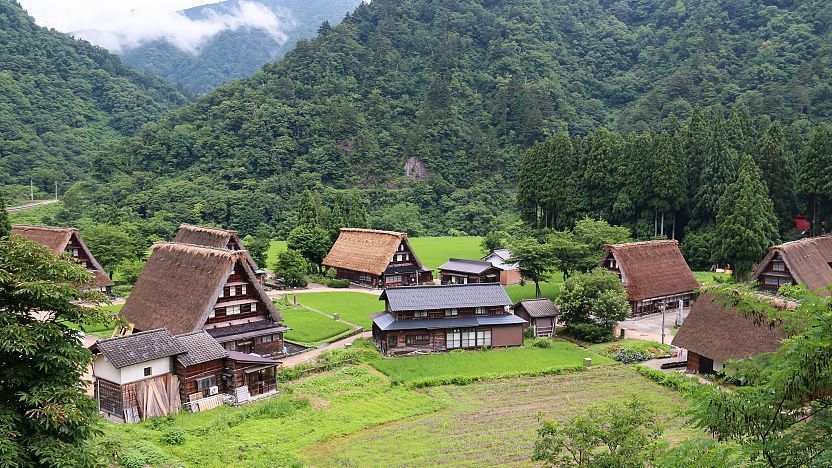
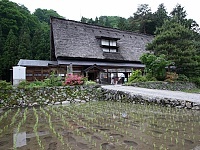
Suganuma (�›�À), one of the main attractions of Gokayama, is made up of two areas, Suganuma Village and the Gokayama Gassho no Sato. Pleasant and easy to explore on foot, the two areas are connected to each other by a tunnel, which also connects to the parking lot on the hill overlooking the village via an elevator.
Suganuma Village and nine of its gassho-zukuri farmhouses, were designated a UNESCO World Heritage Site along with Ainokura and Ogimachi in 1995. A beautiful place to see gassho-zukuri farmhouses, the ones here have been well preserved, and a few of them have become restaurants, minshuku, and museums showing the daily life and the washi paper and saltpeter industries, which sustained the region.

On the other end of the tunnel, the Gokayama Gassho no Sato has a number of traditional farmhouses that have been relocated here from the surrounding region in order to save them from destruction. However no one lives in these houses now; instead they are used by school groups for overnight stays and cultural activities.

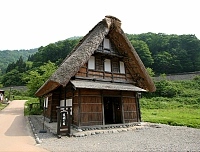
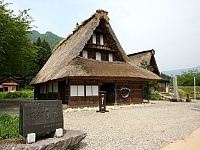
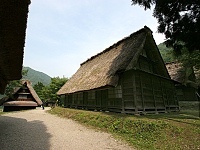
Attractions around Suganuma
Getting there and around
By bus
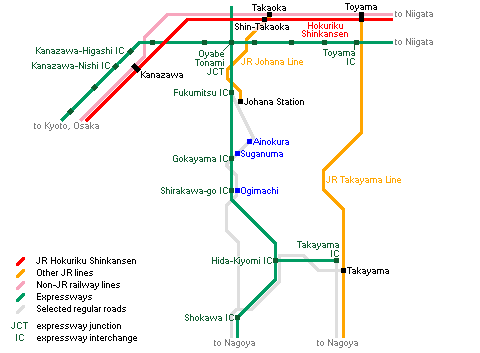
Suganuma is a stop along the bus route between Shirakawago and Takaoka (see timetable). The one way ride from Shirakawago to Suganuma takes 30 minutes and costs 870 yen. From Shin-Takaoka Station, it takes about 80 minutes and costs 1200 yen.
Alternatively, some buses along the bus route between Kanazawa and Shirakawago stop at the "Gokayama Suganuma" bus stop along the way (see timetable and fare details); however, it is possible to board buses only in the direction of Kanazawa and get off buses only in the direction of Ogimachi, but not vice versa. Also, these buses do not serve Suganuma from December through March.
By car
From Ogimachi, Suganuma can be reached in about 30 minutes along National Route 156. You can cut travel time by a few minutes by taking the Tokai-Hokuriku Expressway between Shirakawago and Gokayama IC (580 yen regular expressway tolls). From Gokayama IC, Suganuma is reached in about two minutes.
How to get to and around Shirakawa-go and Gokayama
Questions? Ask in our forum.
Links and Resources
Hotels around Shirakawago & Gokayama

-
-
![]() ShiroyamakanFeaturing free bikes and views of river, Shiroyamakan is a ryokan situated in a historic building in Shirakawa, 47 km from Hida Minzoku Mura Folk Village. Built in 19th century, this 4-star ryokan is within 48 km of Takayama Station and 1.4 km of Shirakawago. The ryokan offers rooms with air conditioning, free private parking and free WiFi. The units are equipped with heating facilities. Guests at the ryokan can enjoy cycling nearby, or make the most of the garden. Fuji Folk Museum is 49 km from Shiroyamakan, while Yoshijima Heritage House is 49 km away. Toyama Airport is 83 km from the property.View on Booking.com
ShiroyamakanFeaturing free bikes and views of river, Shiroyamakan is a ryokan situated in a historic building in Shirakawa, 47 km from Hida Minzoku Mura Folk Village. Built in 19th century, this 4-star ryokan is within 48 km of Takayama Station and 1.4 km of Shirakawago. The ryokan offers rooms with air conditioning, free private parking and free WiFi. The units are equipped with heating facilities. Guests at the ryokan can enjoy cycling nearby, or make the most of the garden. Fuji Folk Museum is 49 km from Shiroyamakan, while Yoshijima Heritage House is 49 km away. Toyama Airport is 83 km from the property.View on Booking.com -
![]() Onyado Yuinosho, ShirakawagoOnyado Yuinosho, Shirakawago provides a sauna and free private parking, and is within 45 km of Hida Minzoku Mura Folk Village and 46 km of Takayama Station. Among the facilities of this property are a restaurant, a 24-hour front desk and a lift, along with free WiFi throughout the property. The accommodation features free shuttle service, full-day security and luggage storage for guests. The ryokan will provide guests with air-conditioned units offering a desk, a kettle, a fridge, a safety deposit box, a flat-screen TV and a private bathroom with a bidet. At the ryokan, all units are soundproof. At the ryokan, every unit includes bed linen and towels. Guests at the ryokan can enjoy an Asian breakfast. There is a snack bar, bar and lounge. Shirakawago is less than 1 km from Onyado Yuinosho, Shirakawago, while Fuji Folk Museum is 47 km away. Toyama Airport is 81 km from the property.View on Booking.com
Onyado Yuinosho, ShirakawagoOnyado Yuinosho, Shirakawago provides a sauna and free private parking, and is within 45 km of Hida Minzoku Mura Folk Village and 46 km of Takayama Station. Among the facilities of this property are a restaurant, a 24-hour front desk and a lift, along with free WiFi throughout the property. The accommodation features free shuttle service, full-day security and luggage storage for guests. The ryokan will provide guests with air-conditioned units offering a desk, a kettle, a fridge, a safety deposit box, a flat-screen TV and a private bathroom with a bidet. At the ryokan, all units are soundproof. At the ryokan, every unit includes bed linen and towels. Guests at the ryokan can enjoy an Asian breakfast. There is a snack bar, bar and lounge. Shirakawago is less than 1 km from Onyado Yuinosho, Shirakawago, while Fuji Folk Museum is 47 km away. Toyama Airport is 81 km from the property.View on Booking.com -
![]() Shirakawago Guest House Kei600 metres from Shirakawago, Shirakawago Guest House Kei is set in Shirakawa and offers rooms with free WiFi. All rooms feature a kitchen and a shared bathroom. The accommodation provides a shared kitchen and luggage storage space for guests. All guest rooms in the guest house are fitted with a coffee machine. The units will provide guests with a microwave. The nearest airport is Komatsu Airport, 46 km from the property.View on Booking.com
Shirakawago Guest House Kei600 metres from Shirakawago, Shirakawago Guest House Kei is set in Shirakawa and offers rooms with free WiFi. All rooms feature a kitchen and a shared bathroom. The accommodation provides a shared kitchen and luggage storage space for guests. All guest rooms in the guest house are fitted with a coffee machine. The units will provide guests with a microwave. The nearest airport is Komatsu Airport, 46 km from the property.View on Booking.com -
![]() CURIO ShirakawagoSituated within 47 km of Takayama Station and a few steps of Shirakawago, CURIO Shirakawago provides rooms in Shirakawa. The 5-star hotel has air-conditioned rooms with a private bathroom and free WiFi. The property is non-smoking and is located 46 km from Hida Minzoku Mura Folk Village. Guest rooms will provide guests with a fridge. Fuji Folk Museum is 48 km from the hotel, while Yoshijima Heritage House is 48 km away. Toyama Airport is 82 km from the property.View on Booking.com
CURIO ShirakawagoSituated within 47 km of Takayama Station and a few steps of Shirakawago, CURIO Shirakawago provides rooms in Shirakawa. The 5-star hotel has air-conditioned rooms with a private bathroom and free WiFi. The property is non-smoking and is located 46 km from Hida Minzoku Mura Folk Village. Guest rooms will provide guests with a fridge. Fuji Folk Museum is 48 km from the hotel, while Yoshijima Heritage House is 48 km away. Toyama Airport is 82 km from the property.View on Booking.com -
![]() Minsyuku KoshiyamaOffering mountain views, Minsyuku Koshiyama is an accommodation situated in Shirakawa, 47 km from Hida Minzoku Mura Folk Village and 48 km from Takayama Station. With a shared lounge, the 2-star guest house has air-conditioned rooms with free WiFi, each with a shared bathroom. Free private parking is available and the guest house also features bike hire for guests who want to explore the surrounding area. All units in the guest house are fitted with a flat-screen TV. At the guest house, every unit is equipped with bed linen and towels. Shirakawago is less than 1 km from the guest house, while Fuji Folk Museum is 49 km from the property. Toyama Airport is 83 km away.View on Booking.com
Minsyuku KoshiyamaOffering mountain views, Minsyuku Koshiyama is an accommodation situated in Shirakawa, 47 km from Hida Minzoku Mura Folk Village and 48 km from Takayama Station. With a shared lounge, the 2-star guest house has air-conditioned rooms with free WiFi, each with a shared bathroom. Free private parking is available and the guest house also features bike hire for guests who want to explore the surrounding area. All units in the guest house are fitted with a flat-screen TV. At the guest house, every unit is equipped with bed linen and towels. Shirakawago is less than 1 km from the guest house, while Fuji Folk Museum is 49 km from the property. Toyama Airport is 83 km away.View on Booking.com
-


