Street Manners in Japan
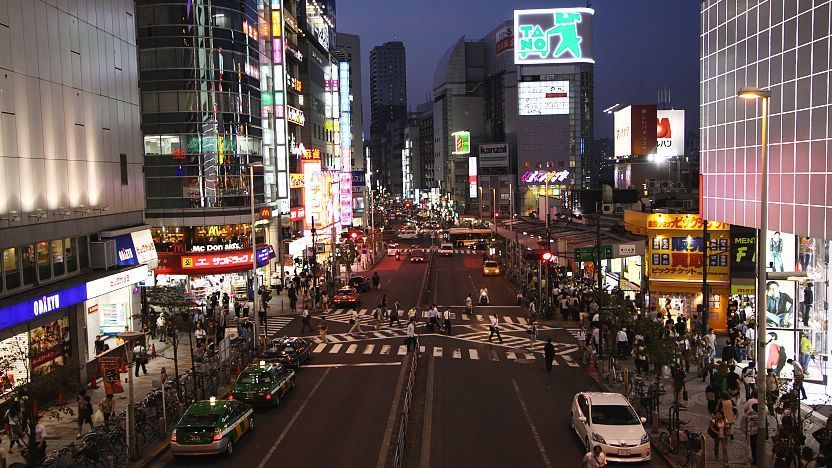
Consideration towards the people around you is highly valued in Japan, and most people will make efforts not to inconvenience others. This also very much applies to people's behavior on the streets of Japan, especially in busy cities like Tokyo whose crowded conditions make it a necessity for people to cooperate. Below are some tips to help you navigate the confusing orderliness on the streets of Japan.
Be aware of your surroundings. Do not block passageways with yourself or your luggage. Unfortunately it is seen too frequently that groups of foreign travelers block traffic, unaware of the flow of people around them. When waiting for others, move somewhere where you do not disturb the flow of traffic. Be careful that your luggage does not block passageways. Don't loiter or sit on the floor.

This is not a rule of good manner but rather an observation made: pedestrians in most countries tend to walk on the same side as they drive. Cars in Japan drive on the left; as a result, many pedestrians walk on the left - often unconsciously. So, when walking through the busy streets of Japan, you are likely to bump into less people if you keep to the left.
Visitors to Japan will quickly notice that except at train stations and convenience stores, it is quite difficult to find garbage cans in public. Instead, you are expected to carry your trash with you until you return to your hotel room or home, or find a garbage bin. Purchase and move accordingly. Smokers are expected to use portable ashtrays for the cigarette buds instead of littering. Portable ashtrays can be purchased at convenience stores.

Eating while walking is considered bad mannered. Sit down or at least stand in a place away from pedestrian traffic when enjoying a meal or snack. Eating while walking can lead to troubles when food soils the clothes of passers-by, is a cause of littering and annoys the locals. For similar reasons, smoking while walking is highly inappropriate especially when it is crowded. In fact, smoking on the streets is prohibited in most city centers and allowed only in designated smoking areas.
While the sight of couples holdings hands has become increasingly common over recent decades, kissing in public remains highly inappropriate.
Japan's privacy laws with respect to photography are strict. In general, you should not publish any photos with recognizable faces without getting permission from the people photographed. When taking photographs, be considerate of the people around you and do not block the flow of traffic. For hygienic reasons, never step with your shoes onto benches or other areas where people may sit, for example to take a photo from higher grounds. The flying of drones is not permitted anywhere in large cities without obtaining permission from the authorities.

Questions? Ask in our forum.