Minamata Disease Related Sites
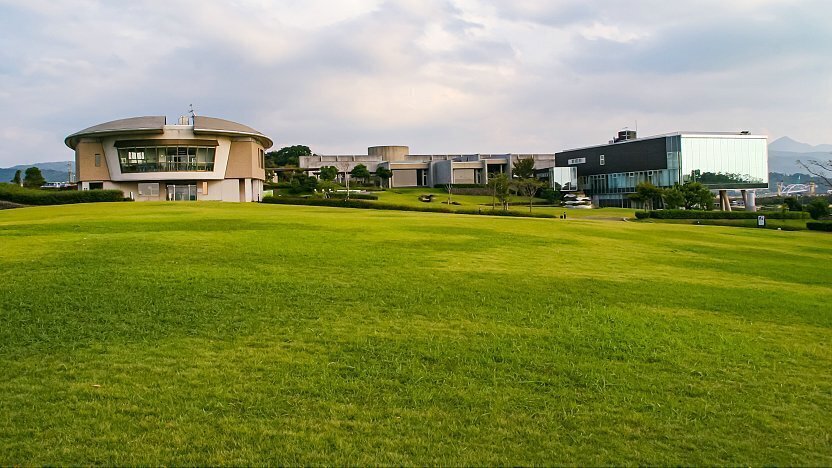
Minamata Disease (�…–“•a, Minamata-byō) is a form of poisoning that affects the body's nervous system and is caused by the consumption of seafood contaminated by methyl mercury which has been discharged into the sea by factories. The disease also affects the unborn babies of mothers who consume contaminated seafood.
The symptoms of Minamata Disease range from chronic fatigue and headache to impairment of vision, hearing, speech and movement. In severe cases, the disease can result in death. However, Minamata Disease is neither infectious nor genetically inheritable.
Minamata Disease was first discovered in the 1950s when several local residents of Minamata developed a mysterious sickness. By the late 1950s, researchers found the cause of the sickness to be the poisonous wastewater discharged into Minamata Bay by the local factory, operated by Chisso.

Nevertheless, it wasn't until 1968 that Chisso stopped releasing mercury into the sea and the national government officially acknowledged the cause of the disease. Subsequently, Chisso and the government have been tried in multiple lawsuits.
Today, approximately 3,000 people are officially recognized as victims, while more than 10,000 people have received compensation. Chisso, meanwhile, is still operating a factory in central Minamata and is contributing to the local economy as the city's largest private employer.
During the 1980s, the worst polluted part of Minamata Bay was reclaimed and other parts of the bay were dredged in order to get rid of the mercury still found on the seabed. The reclaimed land and surroundings have since been turned into the Eco Park Minamata with lots of green space and various memorials and museums related to the Minamata Disease.

Foremost among the Eco Park's attractions is the Minamata Disease Municipal Museum, which documents the history of the disease with bilingual display panels, photographs and an easy to understand video presentation (contact the information desk for an English version). The museum also organizes narration sessions for visiting groups to meet disease victims (advance application required).
Just next to the municipal museum stand the Kumamoto Prefecture Environmental Education and Intelligence Center with exhibits and interactive games for children to learn about the environment, and the Minamata Disease Information Center by the national government with more disease related exhibits.
The Minamata Memorial was built behind the municipal museum on the occasion of the 40th anniversary of the disease's discovery in 1996. On the 50th anniversary a list of names of Minamata Disease victims was transferred from the memorial's chest to a newly built memorial along the Shinsui Boardwalk, a pleasant promenade on the reclaimed land.

Also located on the reclaimed land, not far from the drainage outlet through which the Chisso factory contaminated Minamata Bay, is the Bamboo Garden, a nice Japanese landscape garden featuring more than one hundred bamboo varieties from across the world.
Soshisha, a non-profit organization established to assist patients and to educate the public about Minamata Disease, maintains another museum about the disease in a pleasant residential area in the slopes above the city center. The Minamata Disease Museum Soshisha also manages an extensive archive and keeps a memorial for the cats sacrificed in the experiments to find the cause of the Minamata Disease.

Getting there and around
A taxi ride from Minamata Station to the Eco Park takes about five minutes and costs less than 1000 yen. Alternatively, the Eco Park can be reached in about a 20-30 minute walk, or by rental bicycles, which are available at Shin-Minamata Station.
Among the above introduced sights, only the Minamata Disease Museum Soshisha is not located in the Eco Park. Instead, it can be reached in a 10 minute, 1000-1300 yen taxi ride from Minamata Station.
How to get to and around Minamata

Hours and Fees
Minamata Disease Municipal Museum
Hours
Closed
December 29 to January 3
Admission
Minamata Disease Information Center
Hours
Closed
December 29 to January 3
Admission
Minamata Disease Center Soshisha
Hours
10:00 to 16:00 (Sunday and national holidays)
Closed
Admission
Questions? Ask in our forum.